2 Killed in Kerala Landslide: Heavy Rain Triggers Tragedy at Wayanad Tunnel Project Site
Two people died after a landslide struck a tunnel project site in Kerala’s Wayanad following heavy rainfall
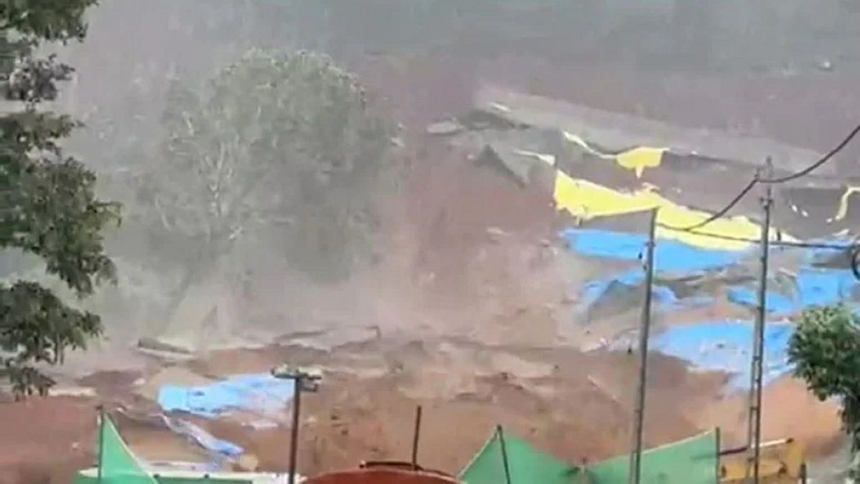
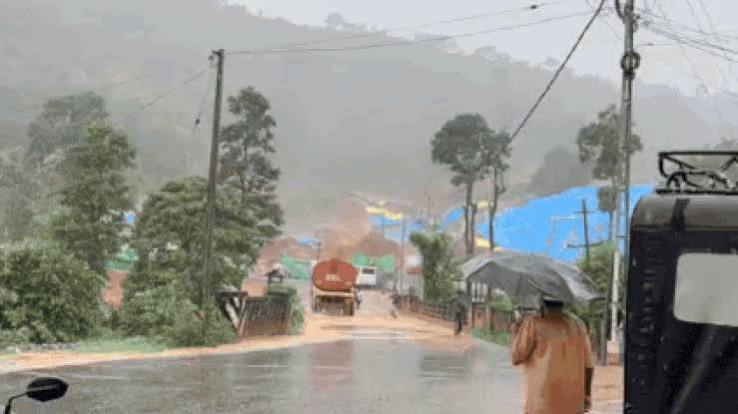
A tragic landslide triggered by relentless rainfall claimed the lives of two workers at a tunnel construction project in Kerala’s Wayanad district, once again highlighting the dangers posed by the monsoon season in India’s hilly regions. The incident occurred after continuous heavy rain weakened the soil around the construction site, causing a massive portion of earth and rocks to collapse onto the work area.
Emergency response teams, including local authorities, police personnel, firefighters, and disaster management officials, rushed to the site immediately after receiving reports of the landslide. Rescue operations continued despite challenging weather conditions, as authorities worked to ensure no additional workers were trapped beneath the debris.
The incident has sparked fresh concerns about worker safety, construction practices in ecologically sensitive zones, and the increasing impact of extreme weather events on infrastructure development across Kerala.
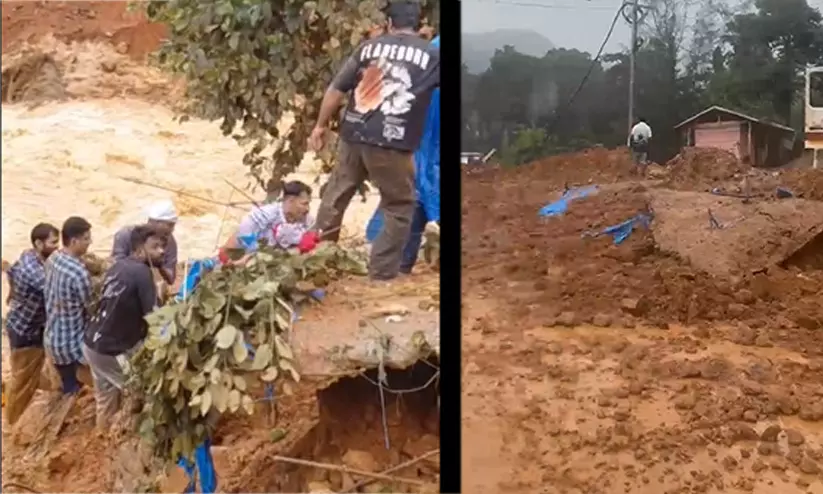
According to preliminary reports, the landslide occurred following several hours of continuous rainfall in Wayanad, a district that has frequently experienced landslides during the southwest monsoon.
The saturated soil surrounding the tunnel construction site suddenly gave way, sending mud, rocks, and debris crashing into the project area. Workers present at the location had little time to react before the collapse engulfed parts of the construction zone.
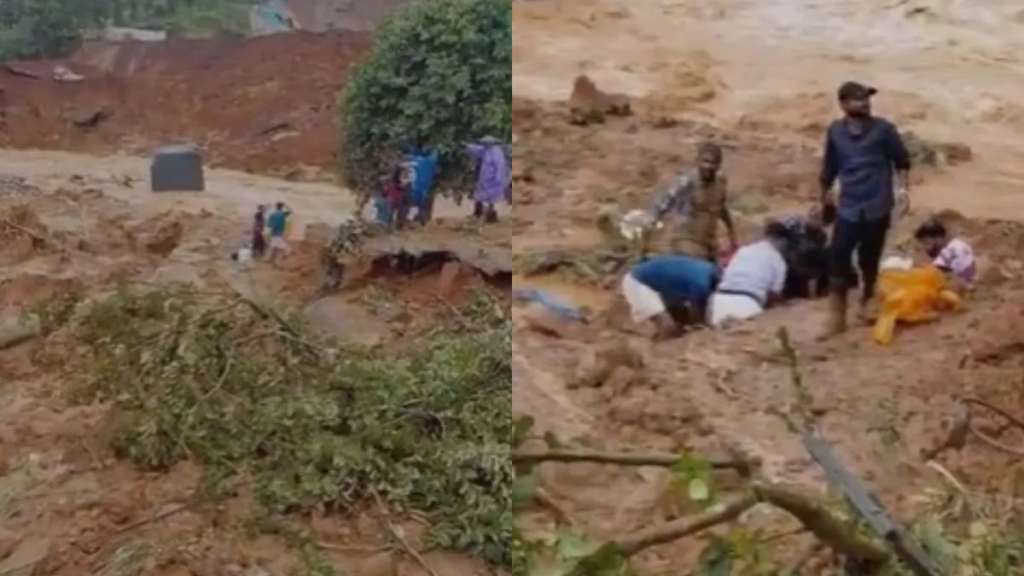
Rescue teams managed to retrieve two workers from the debris, but both were declared dead. Officials also conducted extensive searches to ensure that no additional labourers remained trapped beneath the collapsed earth.
Authorities have not ruled out further inspections to determine whether structural instability or inadequate safety precautions contributed to the tragedy.
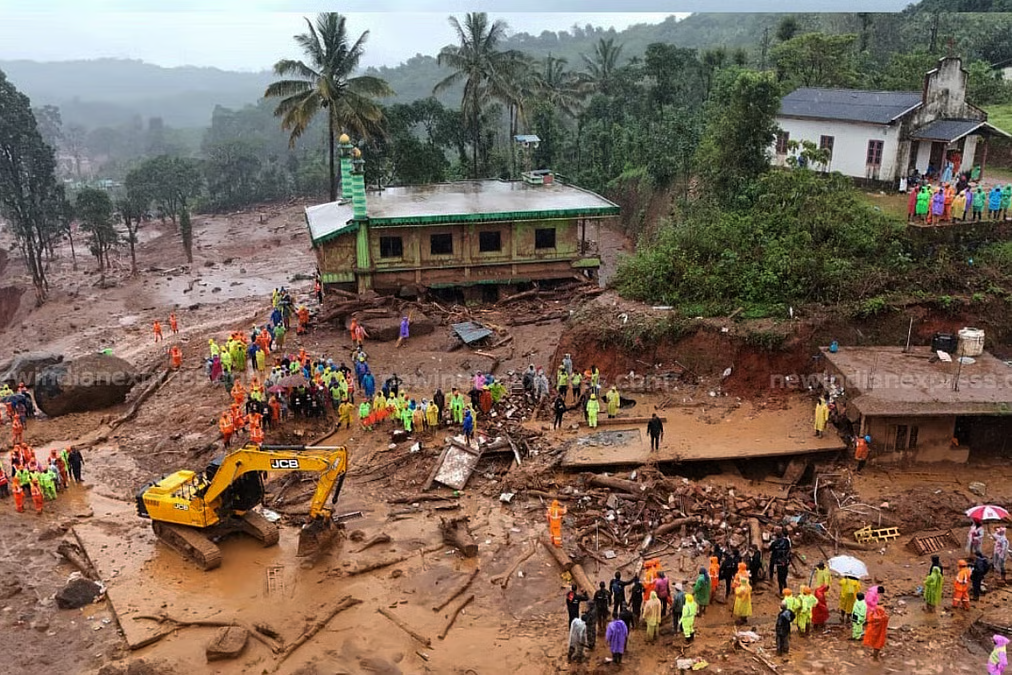
Soon after the incident, multiple emergency agencies reached the accident site. Personnel from the Fire and Rescue Services, district administration, police department, and disaster response teams coordinated rescue efforts despite persistent rainfall.
Heavy machinery, excavators, and earth-moving equipment were deployed to clear the massive volume of mud and rocks covering the construction site. Rescue workers carefully searched every section of the collapsed area to eliminate the possibility of missing workers.
The continuous rainfall complicated rescue operations by making the ground unstable and increasing the risk of additional soil movement.
Officials maintained strict safety protocols while conducting search operations to protect rescue personnel from further landslides.
District authorities closely monitored the rescue mission and instructed concerned departments to remain on high alert as weather forecasts continued to predict heavy rainfall across several parts of Kerala.
Senior officials visited the accident location to assess the situation and coordinate with emergency responders. The district administration also initiated preliminary inquiries into the incident while ensuring support for the affected workers’ families.
Local authorities stated that further action would depend on the findings of technical inspections and safety assessments conducted after rescue operations concluded.
Kerala has been witnessing intense monsoon activity over the past several days, resulting in widespread rainfall across many districts, including Wayanad.
The India Meteorological Department (IMD) has repeatedly warned of heavy to extremely heavy rainfall in several regions of the state, prompting authorities to issue alerts for landslides, flash floods, overflowing rivers, and waterlogging.
Mountainous districts like Wayanad, Idukki, and Pathanamthitta remain particularly vulnerable due to their steep slopes, fragile terrain, and increasing soil saturation during prolonged rainfall.
Experts note that continuous rain significantly weakens soil stability, especially near excavation sites where natural support structures may already be disturbed.
Wayanad’s unique geography makes it one of Kerala’s most landslide-prone districts.
Located within the Western Ghats, the district features steep hills, deep valleys, dense forests, and high annual rainfall. During the southwest monsoon, prolonged precipitation often causes water to seep deep into the soil, reducing its strength and triggering slope failures.
Human activities such as road construction, quarrying, deforestation, and large-scale infrastructure projects may further increase landslide risks if proper environmental safeguards are not maintained.
Experts have repeatedly emphasized the importance of scientific slope stabilization, proper drainage systems, and continuous geological monitoring before undertaking major construction projects in vulnerable regions.
Large infrastructure developments often continue through varying weather conditions, but monsoon seasons create additional challenges for construction companies.
Tunnel projects require extensive excavation, drilling, and removal of earth, which can temporarily destabilize surrounding slopes if adequate reinforcement measures are not implemented.
Heavy rainfall increases groundwater pressure and weakens exposed soil layers, making excavation sites particularly susceptible to collapse.
Construction companies operating in high-risk regions generally adopt multiple safety measures, including:
- Regular geological assessments.
- Continuous monitoring of soil movement.
- Installation of retaining structures.
- Improved drainage systems.
- Temporary suspension of work during extreme weather alerts.
- Emergency evacuation protocols for workers.
Investigators are expected to examine whether all necessary safety guidelines were followed at the Wayanad project site before the landslide occurred.
The tragedy has once again drawn attention to occupational safety standards at major infrastructure projects.
Construction workers often face elevated risks during adverse weather conditions, especially in projects involving tunnels, highways, hill cutting, and mining operations.
Labour organizations have frequently called for stricter enforcement of safety regulations during the monsoon, including mandatory weather monitoring, evacuation procedures, and temporary work suspension whenever landslide warnings are issued.
Experts argue that protecting workers should remain the highest priority, even if construction schedules experience delays due to extreme weather.
Environmental researchers have long warned that climate change is contributing to increasingly unpredictable rainfall patterns across Kerala.
Instead of steady rainfall spread over several weeks, many regions now experience short-duration but extremely intense downpours capable of triggering landslides within minutes.
Combined with expanding infrastructure development in ecologically fragile hill regions, these changing weather patterns are creating new challenges for planners, engineers, and disaster management agencies.
Experts recommend:
- Improved landslide hazard mapping.
- Advanced rainfall monitoring systems.
- Early warning mechanisms.
- Environmentally sensitive construction practices.
- Better coordination between meteorological agencies and project authorities.
The incident has deeply affected local communities and workers associated with the project.
Residents living near the construction site expressed concern over the recurring threat of landslides during every monsoon season. Families of workers have sought assurances regarding compensation, safety improvements, and accountability following the accident.
Local leaders have also urged authorities to strengthen disaster preparedness in vulnerable areas and ensure that emergency response teams remain adequately equipped throughout the rainy season.
Following the tragedy, officials are expected to review safety protocols for ongoing infrastructure projects located in landslide-prone regions.
Authorities may examine:
- Geological safety reports.
- Compliance with construction regulations.
- Weather monitoring procedures.
- Worker protection measures.
- Emergency evacuation systems.
- Project-specific risk assessments.
If shortcomings are identified, agencies could recommend revised safety guidelines for future projects operating in environmentally sensitive zones.
Kerala experiences one of India’s heaviest monsoon seasons every year. While rainfall supports agriculture and water resources, it also brings recurring risks including landslides, floods, road closures, and infrastructure damage.
Experts encourage residents living in hilly districts to remain alert during periods of continuous rainfall and follow advisories issued by local authorities.
Construction companies are similarly advised to prioritize weather-based decision-making and temporarily suspend operations whenever geological risks increase beyond acceptable safety limits.
Read Also : PM Modi in Indonesia LIVE: 7 Key Highlights as He Hails a ‘Golden Chapter’ in India-Indonesia Relations